Nearly three million people call rural Georgia home, scattered across a landscape that stretches from the tangle of the Okefenokee swamp to the wide, sun-bleached fields of Colquitt. They deserve to know who wants to represent them—and how.
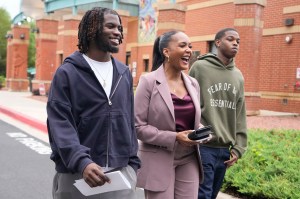
Courier Georgia sat down with three Democratic gubernatorial candidates—Jason Esteves, Keisha Lance Bottoms, and Geoff Duncan—to hear how they’d fight for all Georgians.
Despite spanning a vast swath of the state, rural communities share common crises. Many are losing hospitals, farms, and access to high quality education.
More than 500,000 people in Georgia have lost healthcare via the Affordable Care Act this year after Republicans allowed tax credits to lapse and prices to soar, a 37% enrollment drop that could deal a major blow to rural hospitals who treated ACA patients. And with $1 trillion in Medicaid cuts on the way as part of Republicans’ “One Big Beautiful Bill,” including a $626 million cut in funds for rural hospitals, rural Georgia’s healthcare crisis is only escalating.
At the same time, fertilizer prices have surged since the war in Iran began, with more than 70% of farmers saying they can’t afford all the fertilizer they’ll need this season. All the while, massive data centers are pushing into rural Georgia at an unprecedented rate, despite fierce community opposition.
Esteves, Bottoms, and Duncan each have a different vision for how a governor can meet this moment and show up for rural communities. Here’s what they said.
The rural healthcare crisis
When St. Mary’s Labor and Delivery Unit in Lavonia closed last year, it was part of a trend years in the making. Rural hospitals throughout the state have closed, and only 34% now provide labor and delivery services. The average woman in rural Georgia must drive an additional 41 minutes to reach the nearest hospital with labor and delivery services, compared to 2020. And rural hospital cuts in the One Big Beautiful Bill are expected to worsen this crisis.
The consequences are not abstract. Georgia’s maternal mortality rate is nearly 45% higher than the national average. And the disparities are even greater within the state. In Georgia’s rural counties, the maternal mortality rate is 2.5 times higher than in urban areas. Women in Georgia are regularly dying from preventable causes, simply because they cannot access high-quality healthcare.
At the root of the crisis is a political choice. Georgia is one of only 10 states that has not expanded Medicaid, leaving approximately 400,000 more people without coverage every year. For every uninsured patient who walks into a rural emergency room, the hospital absorbs the cost, causing a financial hemorrhage. The next governor could work with the state legislature to accept federal funds and prioritize expanding Medicaid the day they take office.
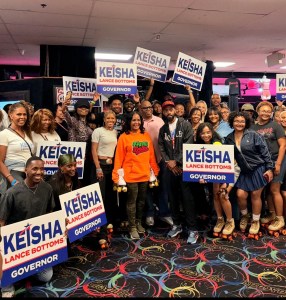
That is precisely what Keisha Lance Bottoms says she’ll do.
“On day one, I’m expanding Medicaid,” she said. “Many people don’t have healthcare. Many people have lost it since the beginning of the year with the lapse of enhanced healthcare tax credits. It’s a real crisis in our state.”
Geoff Duncan—who served as Georgia’s Republican Lieutenant Governor and repeatedly refused to expand Medicaid before switching parties and entering this race—agrees that Medicaid expansion should be any candidate’s top priority.
He wants to give people “access to health insurance so that a family doesn’t ever have to sit in that hospital parking lot deciding whether they walk in and bankrupt themselves or stay at home and deal with their own medical issues themselves,” he said.
Jason Esteves, a state senator who also owns healthcare clinics, says he would go further. In addition to expanding Medicaid, he would create a network of “rural healthcare hubs.” These would serve as coordinated centers linking cities, counties, and nonprofits to ensure no one has to drive more than 45 minutes to receive care. The hubs would serve as a first line of defense for pregnancy care and emergencies alike.
Regulating data centers
No issue has generated more raw anger in Georgia this year than data centers. At a raucous town hall Esteves hosted in late April, residents filled a room to vent about a technology boom that is reshaping their communities without their consent, straining water supplies, driving up utility bills, and arriving with tax breaks paid for by the public.
Esteves wants to end what he calls the “blank checks” by eliminating the sales tax exemption for data centers—a tax break that costs Georgians $2.5 billion in lost revenue per year.
“The State of Georgia should not be handing out blank checks to some of the wealthiest companies in the world while residents struggle with skyrocketing utility bills,” reads a policy statement he distributed at the event.
Duncan has taken a different approach, arguing that local communities should have complete authority over data center decisions.
“If they want a data center, that’s great, have a data center. If you don’t want a data center, then you ought to have the ability to veto the data center,” he said. “I also think this is an opportunity for us to be innovative in Georgia. Instead of using 15 million gallons of raw water a day, maybe we require them to use closed loop water systems so that they don’t use those precious resources against the community.”
Bottoms has called for a pause on all new data center construction, citing utility price hikes and environmental concerns. But that position has invited scrutiny. As mayor of Atlanta, she worked alongside Governor Brian Kemp to recruit large-scale data center investment to the region, including a major Microsoft facility.
Stemming Georgia’s agricultural crisis
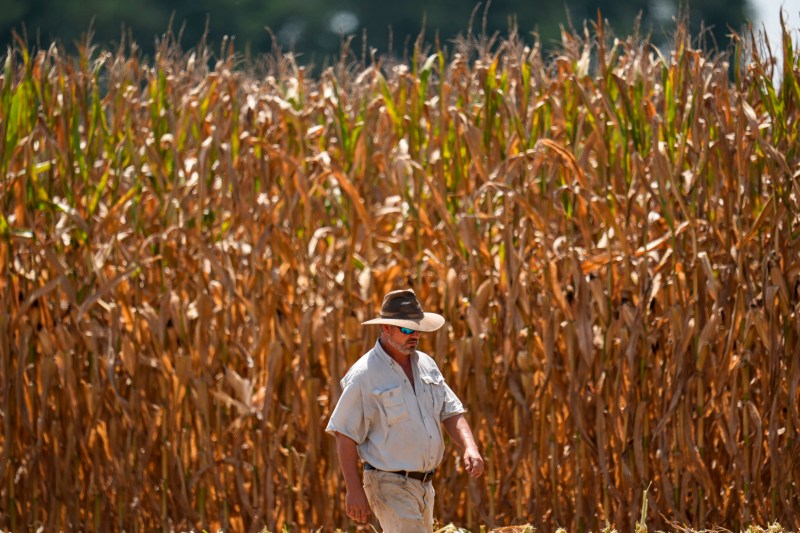
Agriculture is the largest industry in Georgia, but warning signs are mounting. The state now ranks second in the nation for farm bankruptcy filings. Additionally, President Trump’s war in Iran has prompted a fertilizer crisis. Farmers across Georgia and the Southeast say they won’t be able to afford the fertilizer they need for this growing season.
Of the three candidates, Bottoms has put forward the most developed agricultural policy. She has pledged to halt the wave of farm bankruptcies, keep farms in family hands, and fight directly for farmers “harmed by Trump’s tariffs and trade chaos.”
Esteves has framed the issue through the lens of federal neglect. He has criticized the Trump administration’s glacial pace in providing farmers in Southern Georgia with financial relief after Hurricane Helene.
“Every week without that funding is another week farmers can’t replant, rebuild or restock. It’s another week of falling behind on loans, watching bills pile up, and wondering if next season is even possible,” he wrote in an opinion piece in the Albany Herald.
Duncan has said the least on agriculture specifically, though he has pointed to his record as Lieutenant Governor of working to expand resources in rural communities.
The education gap
According to the American Community Survey, if the Atlanta Metro area were a standalone state, it would rank 10th nationally for educational attainment. Georgia’s remaining 130 rural counties would rank second-to-last, ahead of West Virginia, but behind Mississippi.
Duncan’s answer to this crisis is structural. He wants to overhaul the state’s Quality Basic Education (QBE) formula, a 1985 law that governs how public schools are funded. The formula allocates money based on enrollment, special education programs, and staff experience, but has not been meaningfully updated in four decades. It doesn’t account for poverty, which means rural districts are often expected to match the financial capacity of wealthy Atlanta suburbs. Many education advocates consider this a fundamentally broken system.
“Public education is the rising tide that lifts all boats,” Duncan said. But only, he argued, if the formula is finally made fair.
Esteves, who served on the Atlanta Public Schools Board of Education for eight years, including as its chair, says he wants to be “the education governor.”
He told Courier Georgia that his focus would be on ensuring children under five have what they need to learn to read, write, and do math before they ever enter a classroom. To fund his plan, he says would tap the Georgia Lottery Fund to expand pre-kindergarten access statewide, a proven intervention that research shows both improves children’s long-term outcomes and supports mothers’ ability to remain in the workforce.
“I’m going to make sure we invest in our public schools, particularly those in rural areas,” he said, “to make sure they’re getting the funding they need to support those children.”
Bottoms said she would legalize gambling in the state to bring in an additional $300M in annual revenue. The money would be used to fund a major expansion of early childhood education throughout the state.
The primary is May 19th. Rural Georgians will decide if the promises made to them may finally become policy.