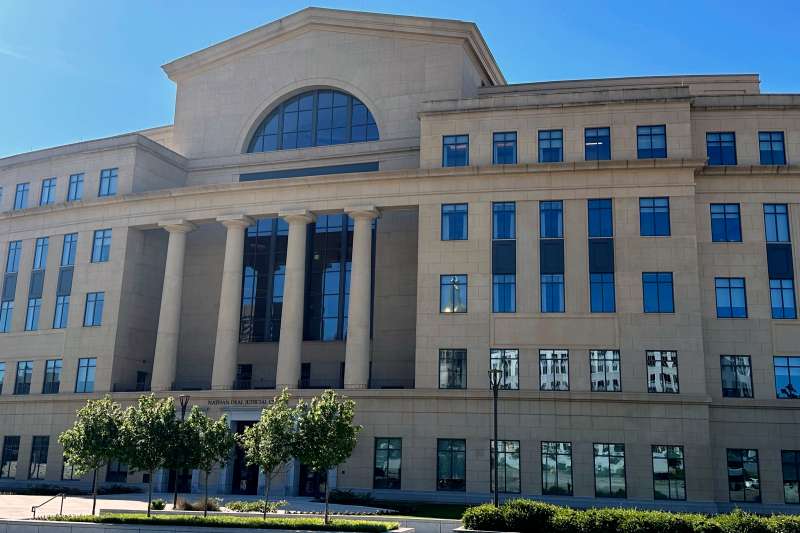
In the winter of 2024, a Georgia judge named E. Trenton Brown made national headlines after he issued major rulings in the criminal case against President Donald Trump for attempting to overturn the results of the 2020 election in Georgia. The case, if successful, could have sent a sitting president to prison for the first time in American history.
The reason the case was thrown out wasn’t that Trump was found innocent. He, along with 18 co-defendants, had been charged with criminal racketeering. The charges included, most infamously, a phone call during which Trump pressured Georgia Secretary of State Brad Raffensperger to “find 11,780 votes,” the exact margin Trump needed to flip the state.
Instead, the Court of Appeals, in a 2-1 decision, ruled that Fulton County District Attorney Fani Willis would be disqualified from the case due to the “appearance of impropriety.”
Willis, who had spent years building the prosecution, had been in a romantic relationship with Nathan J. Wade, the special prosecutor she hired to lead the case. Brown ruled that even though this relationship didn’t affect the facts of the case, Willis and Wade’s relationship was enough to disqualify her office from pursuing it. About a month later, the appeals court unanimously affirmed the dismissal of six counts in Georgia’s election interference case.
With that ruling, the court upheld a trial judge’s decision to throw out the charges. Trump and his 18 alleged co-conspirators walked free.
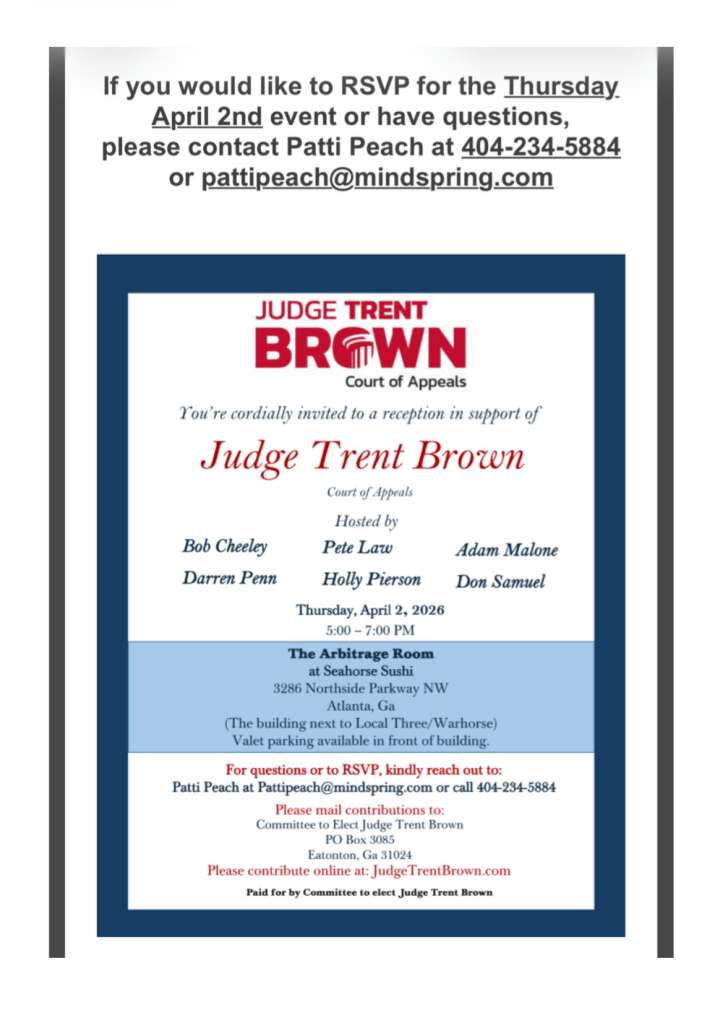
Now, Brown is running for reelection for his seat on the Georgia Court of Appeals. And early last month, one of Trump’s alleged co-conspirators, Bob Cheeley, hosted a fundraiser for Brown’s reelection campaign. The same man whose criminal case Brown dismissed is now funding his political future, but it doesn’t stop there.
Cheeley and his alleged co-conspirators now have a potentially multimillion dollar payout heading to the Georgia Court of Appeals, the very court where Brown sits as a judge.
In 2025, after the case against Trump was thrown out, Georgia Republicans passed a law allowing Trump and his co-defendants to seek reimbursement for their legal fees from Fulton County taxpayers. Former state senator and staunch Trump supporter Brandon Beach sponsored the law; Beach has since become the US treasurer in the Trump administration.
Trump has continually used taxpayer funds to pay off his own legal fees as well as those of his allies. Just today, the Department of Justice announced that it would create a $1.7 billion fund to compensate people who were investigated during the Biden administration.
If the law holds, it could mean millions of dollars flowing from Atlanta taxpayers to the very people charged with attempting to steal their vote and overturn the state’s election. Willis has repeatedly argued that Fulton County taxpayers should not be forced to pay for the president’s legal bills.
Brown may be one of the people who decides whether or not that happens. The Georgia Court of Appeals is on track to hear the case. In cases where the Supreme Court refuses to weigh in, their ruling is the last one that matters.
Running against Brown on the Court of Appeals is Will Wooten, a deputy district attorney who worked under Willis and helped build the original racketeering case against Trump. While Brown dismantled the case, Wooten helped construct it. He’s now asking Georgia voters to send him to the same court that may decide whether the defendants in that case walk away with millions in taxpayer money.
Wooten has earned endorsements from US Senator Jon Ossoff (D-Ga.), the LGBTQ+ Victory Fund, and the Georgia Association of Black Women Attorneys, suggesting that he has broad support across the Democratic coalition.
Brown dismissed the racketeering case on a simple principle: Justice must not only be done, it must be seen to be done. Even the appearance of a conflict, he ruled, is enough to taint a case.
Now, the judge who freed Trump’s alleged co-conspirators is accepting their fundraising help, while a lawsuit that could put more than a million dollars in one of their pockets sits on his docket. If that doesn’t meet Brown’s own definition of an “appearance of impropriety,” it’s hard to imagine what would.