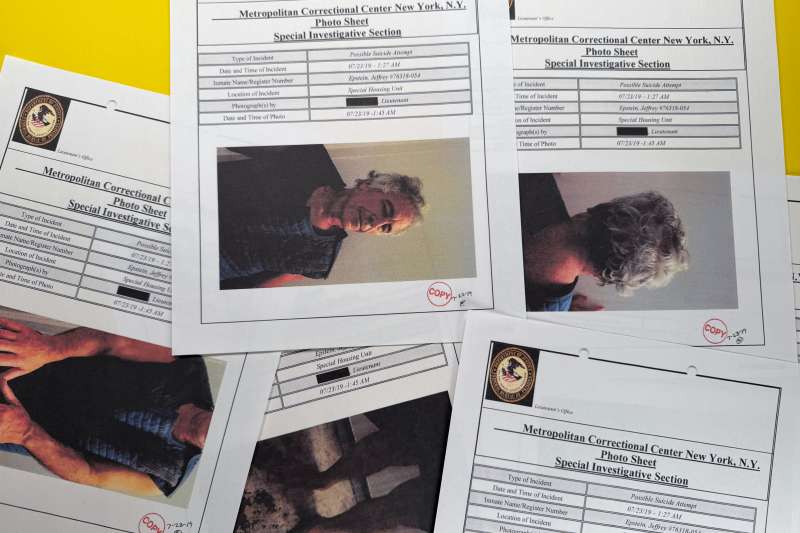
When a bill requiring Georgia politicians to disclose taxpayer-funded sexual assault and harassment settlements reached the floor of the Georgia Senate last month, it marked a rare moment of bipartisan unity. But on Tuesday, hopes of bringing more accountability and transparency to the Golden Dome vanished.
Republican Gov. Brian Kemp vetoed HB 1409, widely known as “the Epstein Amendment,” a bill that would have fundamentally changed what the public could learn about misconduct among the state’s elected officials. The legislation had cleared both chambers with remarkable bipartisan support, but was blocked by Kemp’s veto pen.
What the ‘Epstein Amendment’ would have done
HB 1409 would have required leaders of the Georgia House and Senate to publicly disclose any settled claim of sexual harassment, discrimination, or retaliation involving a member of the General Assembly if public funds were used in the settlement.
Victims’ names would have been scrubbed from released records, a protection supporters said was essential given how the US Department of Justice (DOJ) mishandled the release of the Epstein files, failing to adequately protect survivors’ identities in earlier disclosures.
Officials who refused to release records within three days would have faced a misdemeanor charge, with fines of up to $1,000 for an initial violation and $2,500 for each additional refusal within the same year. The bill did not mention what would happen after the year concluded.
Crucially, the bill applied retroactively, covering settlements dating back to January 1, 2019. That alone could have triggered a significant release of documents, potentially revealing patterns of harassment or misconduct among Georgia lawmakers. Private civil cases would have remained outside the law’s scope.
How the bill came together
The legislation was championed by state Sen. Randy Robertson (R-Cataula), who had spent much of the 2026 session trying to attach a transparency mandate to any bill that would carry it. Starting on March 6—“crossover day,” or the deadline for bills to cross from the Senate to the House—Robertson tried attaching his language to roughly half a dozen different pieces of legislation.
The break finally came when state Sen. Blake Tillery (R-Vidalia) attached the amendment to HB 1409, a bill updating Georgia’s mandated child abuse reporting law. It became, somewhat improbably, the very last bill to pass the Georgia General Assembly this session. Tillery acknowledged the language was Robertson’s and said he was driven to act by watching Congress refuse to hold itself to any similar standard.
“The U.S. Congress had an opportunity to open itself up and provide sunshine and disclosure for claims that they may have had against members related to sexual harassment and other things, in the light of the issues we heard about Jeffrey Epstein,” Tillery said from the Georgia Senate floor just before the vote. “The U.S. Congress voted to not do that. I think our body is better.”
The Senate passed it unanimously on April 2, at the end of the state’s 2026 legislative session. Twelve hours later, at 12:53 a.m., the House followed, passing the bill with broad bipartisan support.
From the Epstein files to the Gold Dome
The political energy behind HB 1409 was fueled in large part by the national reckoning that followed the release of the Jeffrey Epstein files.
Despite President Trump’s promise to release the files during his 2024 presidential campaign, he refused to do so once elected. Trump’s name appears more than 38,000 times in the files, emphasizing his close personal relationship with Epstein.
In November 2025, when it became clear that Trump would not release any Epstein-related material, Congress took matters into its own hands. After enough Republicans in the US House made clear they would vote with Democrats to pass the Epstein Files Transparency Act, Trump reversed course and urged all Republicans to vote for the bill, attempting to get out ahead of what amounted to a political rebuke by members of his own party.
The House and US Senate then passed the bill in near-unanimous votes. The law required the DOJ to publish all unclassified records related to the Epstein investigation and prosecution. For survivors and advocates, it was a historic, if incomplete, victory. The DOJ released an initial batch of documents in December 2025 and a larger release of three million pages followed in January 2026.
The sheer volume of material reignited a national conversation about sexual misconduct and the culture of secrecy that had long protected the powerful at the expense of the vulnerable. Members of Congress pushed the House Ethics Committee to publicly release all sexual misconduct and harassment reports involving members or their staffers. Congress ultimately refused to impose any such transparency requirements on itself—a refusal that Tillery cited directly from the Georgia Senate floor.
The case that moved Robertson
Robertson has said his personal motivation for the bill was the death of Regina Santos-Aviles, a 35-year-old staffer for US Rep. Tony Gonzales of Texas. Santos-Aviles was found critically burned outside her home on September 13, 2025, and died the following morning at Brooke Army Medical Center in San Antonio. The Bexar County Medical Examiner ruled her death a suicide by self-immolation.
In March 2026, Gonzales publicly admitted to an affair with Santos-Aviles before announcing he would not seek reelection. He resigned from Congress in April. Robertson said the episode underscored exactly why transparency laws matter, and urged Georgia’s congressional delegation to push for similar legislation at the federal level.
“They represent us,” Robertson said, “so I think they have an obligation, the same as state senators and state representatives, to be transparent with the people who put them in office.”
What happens now
Not much, at least for now. With Kemp’s veto, the settlements that might have become public before the May 19 primary—when every seat in the Georgia House and Senate is on the ballot—will remain sealed. Voters will head to the polls without access to records the bill’s supporters argued were rightfully theirs.