Georgia held its primary elections on Tuesday, with results that set the stage for what will be one of the country’s most consequential elections in November. Keisha Lance Bottoms won a commanding victory in the Democratic governor’s race, while Republicans are headed to expensive, high-stakes runoffs in several key contests.
Across the ballot, familiar fault lines emerged between Trump loyalists and Kemp-aligned Republicans, election deniers and those who have defended Georgia’s 2020 results, and candidates propelled by the loyalty of the Democratic base. Here’s what you need to know.
Governor
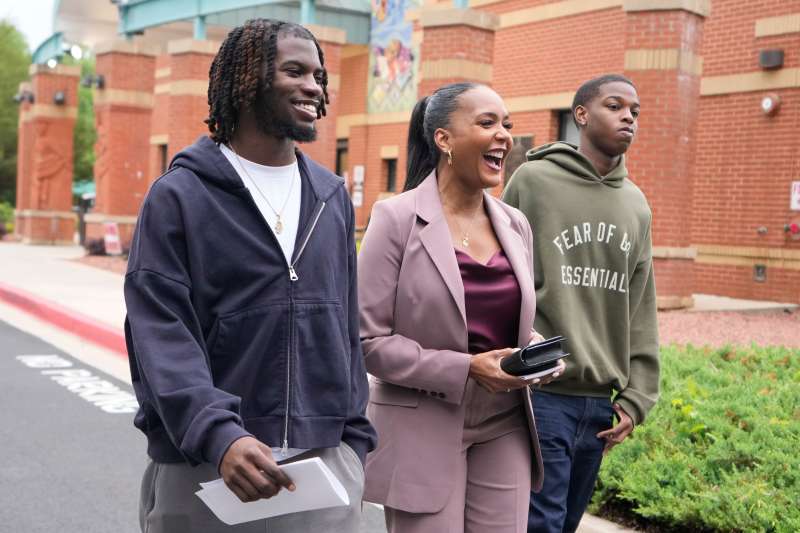
Former Atlanta Mayor Keisha Lance Bottoms sailed to victory in the governor’s race, defeating rivals Jason Esteves, Geoff Duncan, and Michael Thurmond. Her strong name recognition allowed her to consolidate the field, and she won in almost every county in Georgia.
The two Republican candidates, Burt Jones and Rick Jackson, are headed to a contentious runoff. The GOP race has already cost nearly $100 million and is only expected to escalate. Jackson has said he is willing to spend a near-unlimited amount of money on the race, while Jones is relying on the support and endorsement of President Donald Trump.
Lieutenant governor
The lieutenant governor in Georgia holds immense power, determining what bills are voted on in the state legislature. Both Democrats and Republicans are headed to a runoff.
Democrats are deciding between Nabilah Parkes and Josh McLaurin, who worked together as members of the Georgia State Senate. The two former colleagues took identical positions on most policy issues, making the race largely one of turnout. To differentiate themselves, Parkes has emphasized parental leave and maternal health while McLaurin has focused on workers’ rights and affordability measures..
Republicans are deciding between John F. Kennedy, a former Georgia state senator, and Georgia State Senator Greg Dolezal. Dolezal gained statewide attention when he introduced an Islamophobic bill that would ban Sharia law in Georgia—which currently has no bearing on the state’s legal system. The runoff is expected to draw significant outside spending from national GOP groups, who view the office as a key vehicle to pass their legislative agenda.
US senator
Democrat Jon Ossoff ran unopposed and received his party’s nomination. He enters the race with an enormous fundraising advantage and a high national profile. However, Ossoff is expected to face a well-financed Republican challenger in what could become one of the most expensive Senate races in the country.
Republicans Mike Collins and Derek Dooley are headed to a runoff. Collins has cast himself as an unwavering ally of President Donald Trump, while Dooley entered the race with the backing of Republican Gov. Brian Kemp, who has joined him at nearly every campaign stop. The runoff sets up a potentially ugly fight between Kemp and Trump loyalists in the Republican Party.
Georgia Supreme Court
Miracle Rankin and Jen Jordan—who were endorsed by President Barack Obama and Vice President Kamala Harris—fell short against incumbent justices Sarah Warren and Charlie Bethel, who held onto their seats on Georgia’s highest court. The result marks a setback for progressive advocates who invested heavily in flipping the court.
Secretary of state
The secretary of state in Georgia determines how elections are run. Both Democrats and Republicans are headed to a runoff. On the Republican side, Georgia State Rep. Tim Fleming and Vernon Jones, a former Georgia state representative, have refused to say that the 2020 election in Georgia was free, fair, and secure. Their stance puts them at odds with current Secretary of State Brad Raffensperger (R) who certified Georgia’s 2020 results and withstood pressure from Trump to overturn them.
Democrats are choosing between Penny Brown Reynolds, a former Fulton County judge, and Dana Barrett, Fulton County commissioner for District 3. Barrett has emphasized the corrosive impact of false election claims, while Reynolds has focused on expanding voter access and modernizing Georgia’s election infrastructure.
Attorney general
The attorney general is the state’s top law enforcement official, and often appears in front of the US Supreme Court. Georgia State Rep. Tanya Miller won the primary to become the Democratic nominee, while Georgia State Sen. Brian Strickland won to become the Republican nominee.
Miller is also an assistant district attorney in Fulton County. Her career has focused on convicting cases of child abuse and violent crime. Strickland has focused his campaign on stopping sanctuary cities and defending “Georgia’s gun laws from federal overreach.”