In late April, the US Supreme Court gutted a key provision of the Voting Rights Act in Louisiana v. Callais. The law had been central to dismantling Jim Crow-era discrimination, from poll taxes and literacy tests to racial gerrymandering.
In Callais, the Court ruled that electoral maps can no longer be drawn with race as a factor—despite decades of documented evidence that Republicans had drawn maps specifically designed to limit Black voting power.
The fallout could be severe. An analysis from Fair Fight Action and Black Voters Matter found that the ruling could eliminate as many as 19 Black-led congressional districts. And its reach extends well beyond Congress: state legislatures now have the green light to redraw school board districts, statewide maps, and county commissioner maps in ways that dilute Black and progressive voting power.
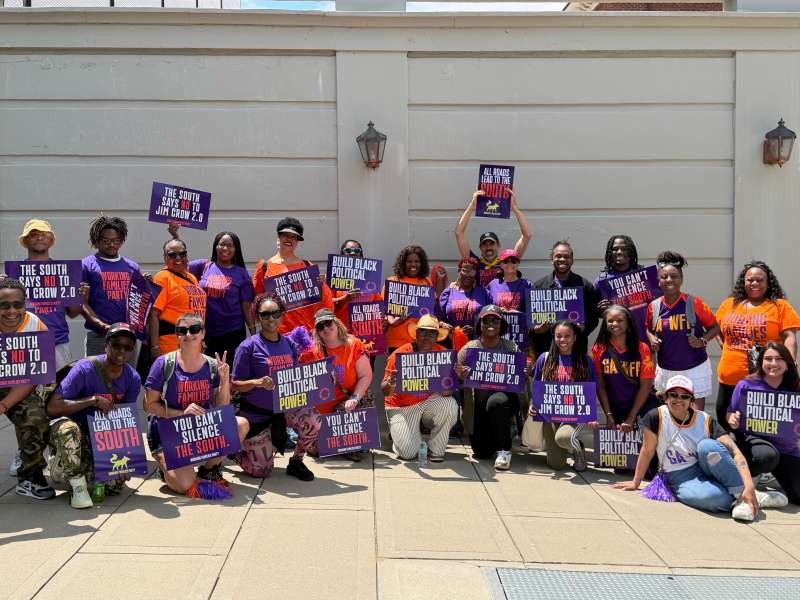
Now, the Working Families Party (WFP)—a progressive political party with chapters across the United States—is mounting a response. The organization has launched “Southern Made: Lead Where You Live,” an ambitious effort to recruit and run 1,000 working-class candidates for office across the South by 2030.
“It felt like a time to go big,” said Britney Whaley, the WFP’s Southeast Regional Director. “As we’re fighting back, we also need to fight forward for the vision that we want.”
How the Working Families Party candidate training program works
WFP is currently hosting monthly calls to welcome prospective candidates and gauge interest. Those who want to get involved—or are weighing a run for office—can join one of their upcoming mass calls, the next of which is scheduled for Tuesday, August 11, from 7 to 8:30 p.m. ET.
Once someone expresses interest, WFP walks them through a structured training process that covers the practical realities of running a campaign: What community connections do they already have? Where are the gaps? What does their personal financial picture look like? And critically, what does it actually take to run an effective get-out-the-vote operation, rather than simply putting out campaign ads?
The program’s long-term goal is to build governing majorities throughout the South. Whaley said WFP came to recognize a recurring problem: WFP candidates would win their races only to find themselves isolated once in office.
“[They] would walk into very hostile governing conditions,” she said. “So we started to think about what it looks like to build concentrated power across our states.”
Building on the Working Families Party campaign successes
This isn’t new territory for the organization. The Working Families Party first launched in Georgia in 2017, and its track record has been growing. In the most recent election cycle, 16 WFP-endorsed candidates won their primaries, including Amanda Hollowell, State Rep. Ruwa Romman, and Keyanna Jones Moore.
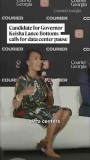
Jones Moore’s win was especially notable: She defeated incumbent Nicole Massiah for the DeKalb County Commission, District 3 seat. A longtime community organizer, Jones Moore has more recently become a vocal opponent of data center expansion in DeKalb County.
She credits WFP with providing what she called comprehensive support—everything from field organizing and canvassing infrastructure to communications strategy, including help shaping a personal narrative that explains to voters who a candidate is and why they’re running.
That kind of support, Jones Moore said, is meant to open the door for people who never saw themselves as future officeholders. “There are very few of us who do run for office who are 100% sure and confident that this is the thing that we should be doing,” she said.
She sees that self-doubt as an asset rather than a liability. “Those people who question—am I right for this? Is this the right time? Can I make a difference?—they’re asking themselves all of the right questions,” Jones Moore said. “One of the hallmarks of an effective public servant, I believe, is the ability to ask yourself questions, but also to ask the questions that others don’t want to ask.”
Why local races matter more than ever
Both Jones Moore and Whaley emphasized that local elections carry outsized weight right now, particularly given the scale of corruption and violent policies at the federal level.
“Working Families Party is now saying the quiet thing out loud that many of us in movement spaces have been saying for quite some time, and that thing is that federal politics are tricky and iffy right now,” Jones Moore said.
“We really don’t know how things are going to go, but we know that we can make a difference on a local level. If there is anywhere that your vote truly does count, it is on a local level.”
Whaley described this as a “nested strategy” designed to elect working-class leaders at every level of the ballot, including local races that can turn on as few as 500 votes. Despite narrow margins, those local races can have a huge impact on people’s lives, from whether or not a data center is built in their community to the quality of the roads they drive on every day.
For Whaley and the Working Families Party, the mission goes beyond playing defense. In a statement, the organization framed its work as part of a larger vision:
“We are determined not just to fight back against racist and authoritarian attacks, but to fight forward with bold leaders and people-centered policies — to forge a future where access to healthcare, affordable housing, safe environments, and economic mobility are not pipe dreams but lived realities.”