If you’re tired of waiting in line on Election Day, we’ve got good news!
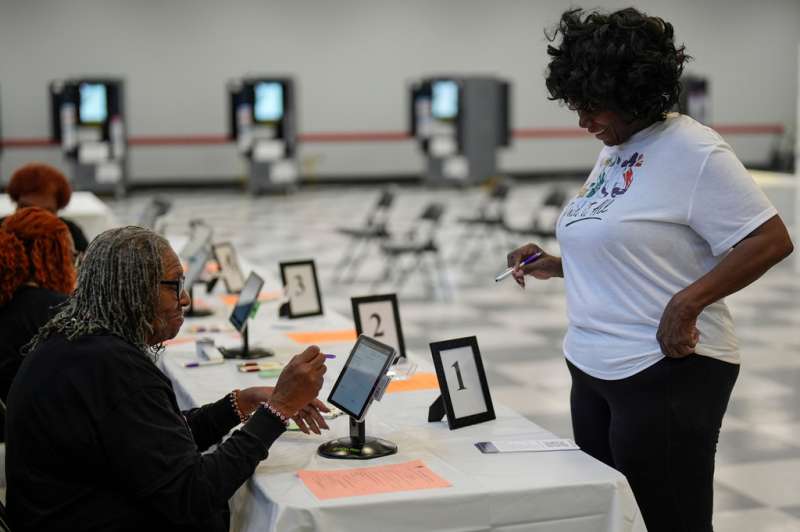
Georgia has just over two weeks of early voting before Election Day. That means you can go to your polling place and cast your ballot ahead of time.
Lines at the polls on early voting days are normally much quicker than on Election Day itself. And lots of places have flexible hours, so you can go before work, after work, or on the weekends.
Here’s everything you need to know about early voting in Georgia.
Key Dates for the 2026 General Election
- Early voting: Oct. 13 – Oct. 30, 2026
- Election Day: Nov. 3, 2026
- Voter registration deadline: Oct. 5, 2026
If a race doesn’t produce a majority winner, a runoff will be held on Dec. 1, 2026. The early voting window for the runoff election, if necessary, will be Nov. 23 to Nov. 25, 2026.
Where to Vote Early
Early voting locations for the 2026 general election haven’t been published yet, but they’ll be posted on the My Voter Page as the election gets closer. Check back there, or contact your county registrar’s office directly if you don’t see your county listed yet.
A major perk of early voting is that, unlike Election Day, when you must vote at your assigned precinct, early voting lets you cast a ballot at any early voting site within your county of residence. If one location has a long line, you can simply head to another site in the county.
Early voting hours
State law guarantees certain early voting days, but exact hours are set by each county, so it’s worth double-checking the hours in your specific county on the GA My Voter Page. In general, you can expect:
- Weekdays: typically 9 a.m. to 5 p.m. (some counties extend hours as early as 7 a.m. or as late as 7 p.m.)
- Saturdays: typically 9 a.m. to 4 p.m.
- Sundays: optional and varies by county.
What to bring
You’ll need a valid, government-issued photo ID to vote early in person. Acceptable forms include:
- A Georgia driver’s license (even if it’s expired!)
- A U.S. passport
- A U.S. military ID with photo
- A tribal ID with photo
- An employee ID from a government entity
- A student ID from a Georgia public college or university
- A free Georgia Voter Identification Card, available at your county registrar’s office or a Department of Driver Services location if you don’t have another qualifying ID
If a poll worker can’t verify your identity or voter registration on the spot, you can still cast a provisional ballot. You’ll then have three days to resolve the issue with your county board of registrars for your ballot to count.
Other ways to skip the line
- Absentee voting: Any registered Georgia voter can request an absentee ballot without needing an excuse. Here’s the link to request an absentee ballot in Georgia. You can apply online, by mail, email, or in person at your county registrar’s office.
And remember: Completed ballots must be received by your county board of registrars by 7 p.m. on Election Day, so it’s important to return your absentee ballot with plenty of time! - Accessibility: Early voting sites offer audio ballots for voters who are blind or have low vision, as well as accessible booths for voters using wheelchairs. You’re also allowed to bring a family member or friend to help you fill out your ballot if needed.
Why vote early?
Beyond dodging Election Day crowds, early voting gives you a buffer to fix problems—like an ID mismatch or a registration issue—while there’s still time to vote before the polls close for good. It also takes pressure off poll workers on Election Day itself, which tends to mean smoother, faster lines for everyone.
And remember, it’s always best to confirm your polling location and hours on the My Voter Page before heading to the polls, since specifics can vary by county and may change closer to the election.