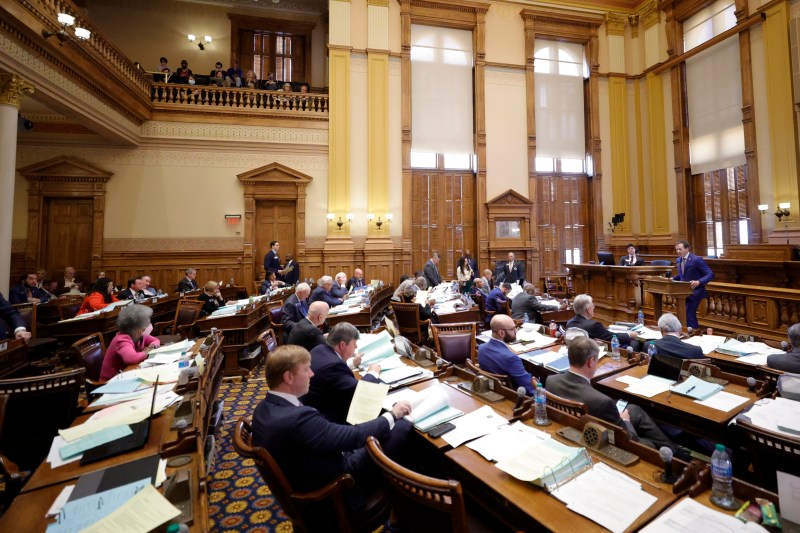
When Georgia lawmakers enter a special session on Wednesday, they could reshape everything from US House voting maps to the property tax bill in your mailbox.
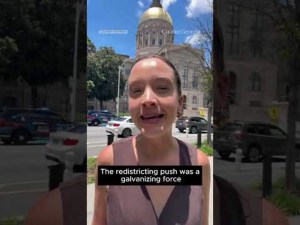
Gov. Brian Kemp called the session primarily to redraw Georgia’s congressional and legislative maps—a mid-decade redistricting push that follows a US Supreme Court ruling weakening the Voting Rights Act—and to resolve a looming deadline involving QR codes on Georgia’s ballots.
Unlike Georgia’s regular session, which runs for 40 legislative days, special sessions don’t have a fixed length. How long lawmakers stay at the Capitol will likely depend on how quickly they can resolve the redistricting and voting-system fights.
But Kemp’s proclamation has grown since he first issued it. He amended it to tack on three more items: confirming recent appointments, formally ratifying an expired gas tax suspension, and clearing the way for counties to ask voters to approve a new property tax relief program.
That brings the total to five items. Here’s a closer look at each.
Redistricting
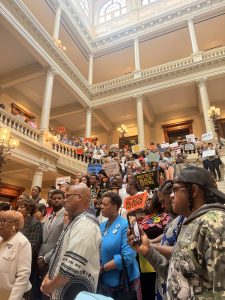
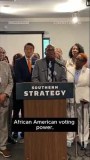
The first and most consequential item on the agenda is redrawing legislative maps, and it could roll back decades of hard-won gains in Black political representation across Georgia.
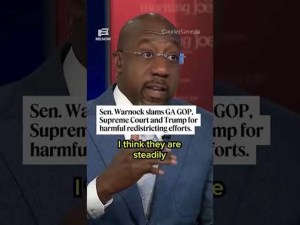
Georgia Republicans could join a wave of other Southern states racing to redraw electoral maps after the U.S. Supreme Court’s ruling in Louisiana v. Callais, which undid a key Voting Rights Act protection against racial gerrymandering.
Civil rights advocates have condemned the ruling and warned that it gives Republican legislatures across the South a green light to dismantle Black-led districts that took decades of activism and litigation to win. Georgia’s current maps were drawn in a 2023 special session after a federal court ruled the state’s previous maps violated the Voting Rights Act.
But Georgia’s session is could to go further than most other states.
Gov. Kemp isn’t just targeting the US House. He also recommended redrawing House and Senate lines in the Georgia State Legislature, meaning Black representation in the General Assembly itself—not just in Washington—could be wiped out.
Senate Minority Leader Harold Jones, an Augusta Democrat, has accused Republicans of redrawing the maps every few years simply to protect their own majorities rather than to help Georgians.
“The bottom line is Republicans no longer have any ideas,” he said during a press conference on Monday. “Their only recourse now is to rig maps and cheat.”
Addressing voting systems
In 2024, Georgia Republicans passed a law banning QR codes to vote, effective July 1, 2026.
The law followed the 2020 election, which sparked widespread but unsubstantiated fraud claims in Georgia politics.
Despite the deadline, lawmakers left this year’s regular session without passing a replacement system. Now, with that July 1 deadline days away, election officials say they need answers fast.
A special election to fill the late U.S. Rep. David Scott’s congressional seat is set for July 28, just weeks after the deadline hits. If the law does not change and that election is run with QR codes, it would be illegal.
If Republicans pass a law requiring new voting machines despite no evidence of fraud, it could cost Georgia taxpayers more than $100 million.
Confirming Gov. Kemp’s appointments
With the General Assembly out of session since April, Gov. Kemp has continued naming people to state boards, authorities, and commissions. Many gubernatorial appointments require legislative confirmation, so the special session gives lawmakers a chance to formally sign off on those picks before they can fully take their seats.
Retroactively approving the gas tax
Earlier this year, lawmakers temporarily waived Georgia’s gas tax—saving drivers about 33 cents a gallon—and Kemp later extended that waiver on his own through an emergency order. That extension lapsed June 3, sending gas prices back up.
Lawmakers won’t be voting on whether to suspend the tax again. Gov. Kemp is asking them to approve his emergency order after the fact. Because the extension has already expired and Gov. Kemp has chosen not to renew it, the vote would not affect current gas prices.
Giving counties the chance to opt-in to property taxes
In May, Kemp signed Senate Bill 33—the Homeownership Opportunity and Market Equalization Act of 2026—creating a new option for local governments called the Local Homestead Option Sales Tax, or LHOST. It’s a 1% local sales tax that counties and cities can use to reduce the amount they need to collect through property taxes.
But a county can’t put LHOST in place on its own. A county’s legislative delegation first has to pass a “local Act” authorizing a referendum, and voters then have to approve it at the ballot box. That’s precisely what Kemp’s amended proclamation now allows lawmakers to do this week: pass those local Acts so individual counties can ask their own voters to weigh in.