The US Senate passed the most sweeping overhaul of federal permitting in decades late Thursday night, voting 62-33 to send the Bipartisan American Affordability and Jobs Act to the House.
Georgia’s two Democratic senators, Jon Ossoff and Raphael Warnock, were not among its supporters. Both had voted to advance the bill at earlier stages of the Senate debate. On final passage, they joined 28 other Democrats, Sen. Bernie Sanders (I-Vt.), and two Republicans in voting no.
Ben Prater, director of the Southeast field conservation program at Defenders of Wildlife, called their votes “a strong indication both for the power of their leadership and their willingness to listen to their constituents.”
What is BAAJA?
At its core, BAAJA is a permitting reform bill. It would rewrite how federal agencies review and approve energy and infrastructure projects, from power lines and solar farms to pipelines, mines, and data centers.
The bill would change several of the nation’s foundational environmental laws, including the National Environmental Policy Act (NEPA), the Clean Water Act, the Endangered Species Act, and the National Historic Preservation Act.
Prater said those laws have protected Georgia’s wildlife and public lands for decades. Weakening them, he said, “leaves the door wide open” to potentially harmful development.
Who supports BAAJA?
Nearly every Republican voted for the bill. They were joined by 15 members of the Democratic caucus, including Senate Minority Leader Chuck Schumer.
Proponents say permitting reform is urgently needed, especially as Americans struggle with rising costs. They argue that faster approvals will let companies bring new power online sooner, driving down energy prices. An analysis by the research firm Rhodium Group projected the bill would cut household electricity bills by an average of $50 to $78 a year by 2040.
The American Petroleum Institute, the oil and gas industry’s largest trade group, has been a strong supporter of the legislation. It argues that “permitting delays and uncertainty can drive up the cost of building infrastructure and postpone projects that could help make energy more affordable.”
The bill is also supported by some of the largest artificial intelligence companies in the world like Nvidia, Meta, Amazon, Google, and OpenAI, the company behind ChatGPT. The Information Technology Industry Council, the trade group that represents these companies, called the bill “essential to America’s ability to build, compete, and lead—especially in the AI era.”
Who opposes BAAJA?
Opponents say the bill fails to distinguish between clean energy and fossil fuel projects. By speeding approvals for everything from solar farms to fracking, they argue, it would worsen the climate crisis while limiting communities’ ability to fight developments they don’t want.
“This deregulatory deal further eviscerates the National Environmental Policy Act, rips apart key provisions of the Clean Water Act, weakens the Endangered Species Act, and codifies the highly problematic Mining Regulatory Clarity Act that gives mining companies free rein over public lands, all while simultaneously preventing ordinary people from challenging harmful projects in court,” the Climate Justice Alliance wrote in a statement.
Environmental law groups have zeroed in on the bill’s limits on lawsuits. Earthjustice argues that the bill significantly restricts access to the courts at a time when judges are an important check on the executive branch. Days before the final vote, about 100 environmental and energy law scholars warned Senate Democratic leaders that the bill would do lasting damage to the nation’s core environmental laws.
Tribal nations have been among the most vocal opponents. The National Congress of American Indians called on both chambers to reject the bill outright, saying the bill would undercut their right to decide what gets built on their land and in their neighborhoods.
What impact could BAAJA have in Georgia?
Prater described the legislation as “written by industry, for industry.” He noted that the Southeast is already developing rapidly, and said the bill would strip away guardrails that have protected Georgia’s endangered species and wild places for decades.
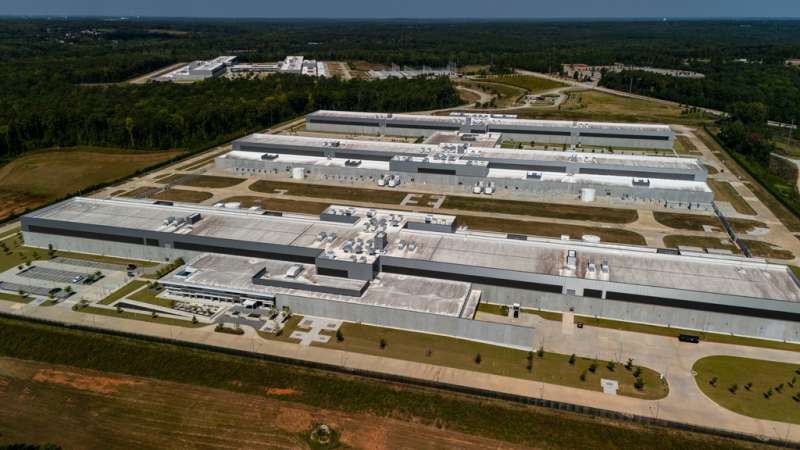
The bill would require data centers to pay for the grid upgrades needed to serve them. But critics say its limits on environmental review and lawsuits could also speed data center construction. That could matter a great deal in Georgia: metro Atlanta has more data center capacity under construction than any other US market, according to the real estate firm CBRE.
Why did Georgia’s senators vote no on BAAJA?
Ossoff and Warnock both voted to advance BAAJA when the Senate first took it up. By final passage on Thursday, both had flipped.
Warnock explained his decision in a statement. “We need permitting reform in America because there are too many barriers to progress and to getting clean energy projects done,” he said. “At the same time, we must protect our air and water and protect local communities from closed door processes that enable the building of data centers without local input.”
Senators filed amendments to address concerns about the bill, but none received a vote before final passage. Warnock pointed to that as the deciding factor.
“I had hoped that a robust amendment process could’ve addressed these shortcomings in the bill that Georgians have rightly raised, but in its absence, I am voting no,” he said. “I believe we can get a better bill when a new Congress is sworn in this January.”
Democrats won control of both chambers of Congress in the Nov. 3 midterm elections and will take power in January.
Warnock has been outspoken about communities’ right to decide whether a data center is built near them. In August, after visiting the site of OpenAI’s planned 3.2-gigawatt data center in Effingham County, he called for a statewide moratorium on data center construction in Georgia. Under his proposal, the pause could be lifted for a specific project only if safeguards on utility bills, transparency and pollution were in place.
Ossoff had not released a statement explaining his vote as of Friday morning.
What’s next for BAAJA?
The bill now goes to the House, which must pass the Senate’s version before Jan. 3 for it to advance. If it passes, President Donald Trump is expected to sign it into law.
House Democrats are divided. Some want to amend the bill now, while others would rather wait for their new majorities in January, as Warnock suggested.
Prater said Ossoff and Warnock listened to their constituents and that Georgians should now turn to their representatives in the US House.
“Now is the time to continue to reach out and engage with our representatives,” he said. He pointed to the midterm elections as evidence that voters are ready to make their voices heard across party lines.