Georgia’s 2026 US Senate race is shaping up to be one of the most closely watched contests in the country. Incumbent Sen. Jon Ossoff is the only Democratic senator up for re-election in a state Donald Trump carried in 2024, and Republicans see the seat as a top pickup opportunity. He faces Rep. Mike Collins (R-Jackson), who won a contested GOP primary runoff after a last-minute endorsement from President Trump.
Below is a look at where the two candidates stand on the issues driving the campaign, along with the state of the race itself.
Healthcare and reproductive Rights
Healthcare access has been a centerpiece of Ossoff’s campaign. In the Senate, he backed capping insulin costs at $35 a month and has pushed to expand Medicaid, frequently highlighting the gaps in care faced by rural Georgians. He has condemned the state’s six-week abortion ban, arguing it strips women of autonomy over deeply personal decisions and pointing to Georgia’s shortage of OB/GYNs and its high maternal mortality rate as evidence of a system already under strain.
Collins has advocated for expanded healthcare tax credits, more funding for rural hospitals, and policies aimed at lowering prescription drug costs. But his voting record cuts against some of those stated goals: he supported the One Big Beautiful Bill Act, which the Kaiser Family Foundation estimates will cut more than $1 trillion in federal health spending, introduce new Medicaid work requirements, and reduce rural hospital funding by $137 billion.
Collins also opposed extending pandemic-era Affordable Care Act subsidies, a move that contributed to more than half a million Georgians losing coverage as those credits expired. On abortion, Collins originally said he opposes the procedure in all circumstances, including cases of rape, incest, or risk to the mother’s life. More recently, he has supported Georgia’s six-week abortion ban, which does include some exceptions.
Economy and Tariffs
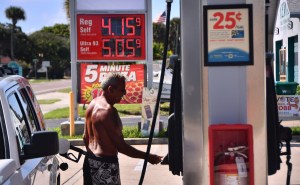
Affordability has emerged as arguably the dominant issue of the 2026 election cycle, and both candidates are trying to claim it. Ossoff has blamed Trump’s tariffs, health premium increases, and the Iran War for rising costs. He pushed the Trump administration to repeal its tariff regime and backed a Senate resolution aimed at blocking it. He also called for Trump to end what the senator described as an “illegal war” in Iran, which is driving up gas prices across the country.
Collins has largely embraced the administration’s “America First” economic agenda—tax cuts, deregulation, and tariffs—arguing the approach will ultimately bring down costs. Critics, including Ossoff’s campaign, say Collins’ position aligns with policies that are actively squeezing Georgia households, pointing to the OBBA’s tax benefits skewing toward wealthier Americans.
Democracy
Ossoff has positioned himself as a defender of voting rights, reintroducing the Right to Vote Act, which would let voters challenge restrictive state or local election laws in court, shifting the burden onto governments to justify any voting restrictions.
Collins, by contrast, has repeatedly questioned the legitimacy of the 2020 presidential election. In a 2022 campaign video, he claimed Democrats “stole the 2020 election” and that “Donald Trump won Georgia.” Those are both false statements. He has continued making similar claims, telling CNN in June that Trump “won that race” in Georgia, despite certified results, multiple audits, and no evidence of fraud sufficient to change the outcome.
Immigration
Both candidates support some level of increased border security, but they diverge sharply on enforcement tactics and detention practices.
Ossoff backs expanded immigration enforcement along the southern border while becoming an increasingly vocal critic of ICE conduct under the second Trump administration. He has led investigations into alleged human rights abuses at detention facilities and accused the administration of blocking congressional oversight.
“The American people expect and deserve secure borders,” he has said. “They do not expect and support human rights abuses of people who are in U.S. custody.”
Ossoff also sponsored legislation requiring local approval before new federal immigration detention facilities can open, and helped block a planned 10,000-bed facility in Social Circle, Georgia.
Collins’ key immigration achievement came through the Laken Riley Act, which mandates detention without bail for undocumented immigrants charged with certain low-level crimes. Ossoff voted for the bill.
Taxes
Ossoff was a key vote behind the 2021 child tax credit expansion, which cut child poverty roughly in half, and has pushed to make it permanent. He voted against the One Big Beautiful Bill Act (OBBA), arguing its tax benefits disproportionately favor the wealthiest families.
Collins supported the OBBA and has made further tax cuts a central campaign promise, alongside deregulation.
Housing
This is one of the few areas of overlap. Both Collins and Ossoff voted for the 21st Century Road to Housing Act, which limits the number of additional single-family homes corporations can purchase, among other provisions aimed at making it easier for people to afford a home.