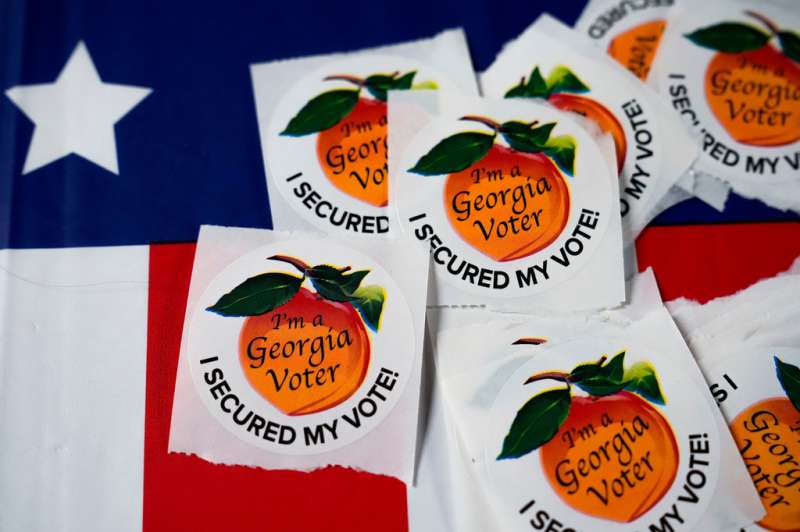
Ensuring safe, secure elections is the foundation of democracy. That’s why officials in Georgia have taken extensive steps to build trust in the results of the 2026 midterm elections.
On Aug. 12, Georgia Secretary of State Brad Raffensperger launched a bipartisan Election Integrity Task Force made up of former elected officials, county election administrators, and other election experts from both parties. Members include former Democratic Gov. Roy Barnes, former Republican Sen. Saxby Chambliss, former Republican Rep. Drew Ferguson, and former Atlanta Mayor Shirley Franklin, a Democrat.
Raffensperger, a Republican, said he wants the appointees’ long records of public service to help voters trust the outcome of the midterms and to push back against those “casting doubt on it and creating that doubt in people’s minds.”
Members will help lead regional election worker trainings, take part in roundtable policy discussions around the state, and coordinate directly with local election officials on the ground. Their work is aimed at both improving election administration and reassuring the public about the safeguards already in place.
Here are the safeguards that ensure elections in Georgia are safe and secure.
Paper ballot backups
When you vote in Georgia, you make your selections on an electronic touchscreen. The machine then prints a paper ballot showing your choices, which you can review before casting it. That paper ballot—not the electronic record—serves as the official record for any audit or recount, meaning every vote exists in two independently verifiable forms.
Risk limiting audits
After elections, the state performs audits comparing hand counts of a sample of paper ballots against the machine tallies. These audits are designed to catch discrepancies with a high degree of statistical confidence without requiring a full hand recount of every ballot. The Secretary of State’s office has pointed to audits of recent special elections as confirmation that reported outcomes matched the paper record.
Voter list maintenance
Raffensperger’s office regularly reviews and updates voter rolls, removing registrations tied to voters who have died, moved out of state, or are otherwise no longer eligible. (This is a good reminder to regularly check your own status on the Georgia My Voter Page! It is important to update your registration, especially if you’ve moved.) Raffensperger has repeatedly described Georgia’s elections as among “the best in the nation.”
Equipment testing and chain of custody
Before any election, county election officials test voting equipment for accuracy to confirm machines are recording and counting votes correctly. Ballots and equipment are then kept under documented chain-of-custody procedures—sealed, logged, and tracked—from the time polls close through certification.
Bipartisan oversight of elections
Both parties are entitled to have poll watchers and monitors present at polling places, ballot counting, and audits, adding an additional layer of transparency to the process from Election Day through certification.
Law enforcement coordination
The new task force also includes Terry Norris, executive director of the Georgia Sheriffs’ Association, reflecting ongoing coordination between election officials and law enforcement on issues like ballot security and responding to threats against election workers.
Taken together, all of these safeguards are designed to make sure Georgia’s elections stay safe and secure.