In the spring of 1838, Cherokee families across North Georgia went to work in their fields as they had for generations. The Cherokee Nation had never accepted the treaty ordering it west, and many families still hoped their leaders could persuade Washington to back down.
Georgia’s state government had wanted that land for decades. Back in 1802, it gave the federal government its claims to what are now Alabama and Mississippi; in return, Washington promised to extinguish Native land claims in Georgia.
Within weeks, nearly every one of those Cherokee families would be rounded up and marched out of Georgia.
Most of us learned the broad strokes of the Trail of Tears in school: the treaty, the march west, the year 1838. How it actually unfolded on the ground, and its far-reaching effects, rarely made it into the lesson plan.
Here are 11 pieces of Trail of Tears history worth knowing, plus where to see them for yourself.
A note on language: The Cherokee Nation remembers this chapter as the removal, describing how Cherokees were rounded up and forced from their homes. We use “forced removal” throughout.
1. Cherokee land in Georgia was serious farm country
One common argument for the removal held that the Cherokee weren’t putting their land to productive use. The farm records tell an entirely different story.
Long before Georgia called itself the Peach State, Cherokee farmers had planted peach trees by the tens of thousands. Property appraisals from 1836 and 1837 counted close to 80,000 fruit trees across the Cherokee Nation’s Georgia lands. Roughly 63,000 of them were peach trees.
Historian Sarah H. Hill, whose 2005 research report for the National Park Service and the Georgia Department of Natural Resources reconstructed the removal in Georgia, also tallies nearly 20,000 cultivated acres and 269,000 bushels of corn in 1835, plus some 40,000 hogs driven to markets in Alabama and middle Georgia the following year.
Cotton was in the mix, too. In an 1826 letter, Cherokee leader John Ridge wrote that most families grew it for their own use, while “a few have grown it for market and have realized very good profits.”
Hill’s verdict on that original argument: “wholly inaccurate.”
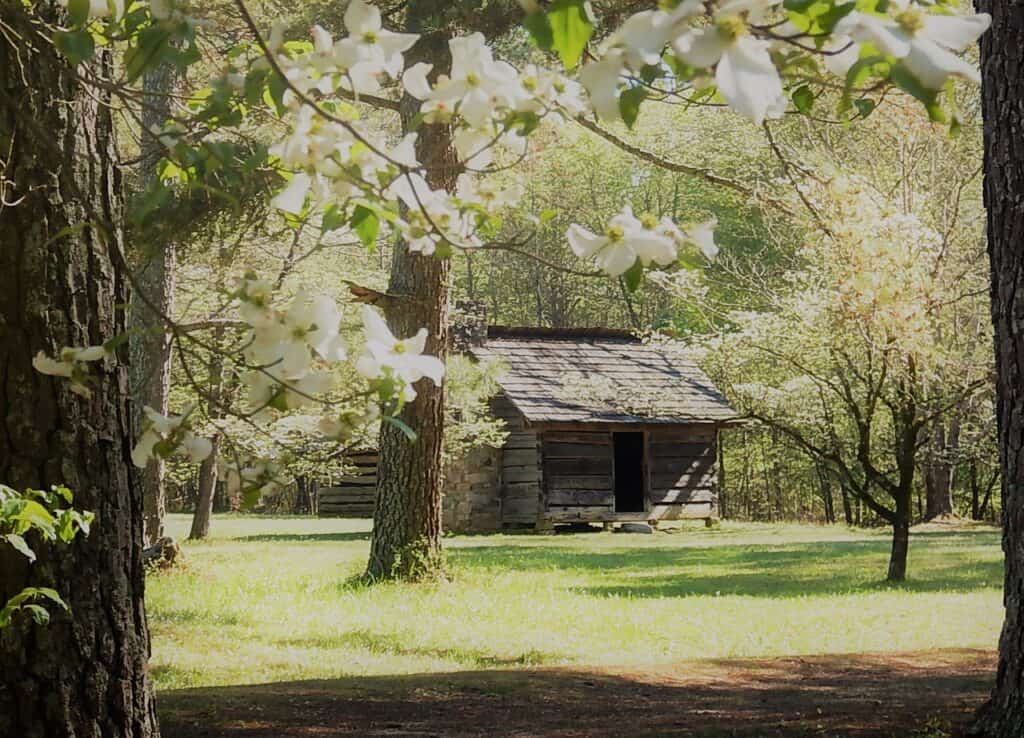
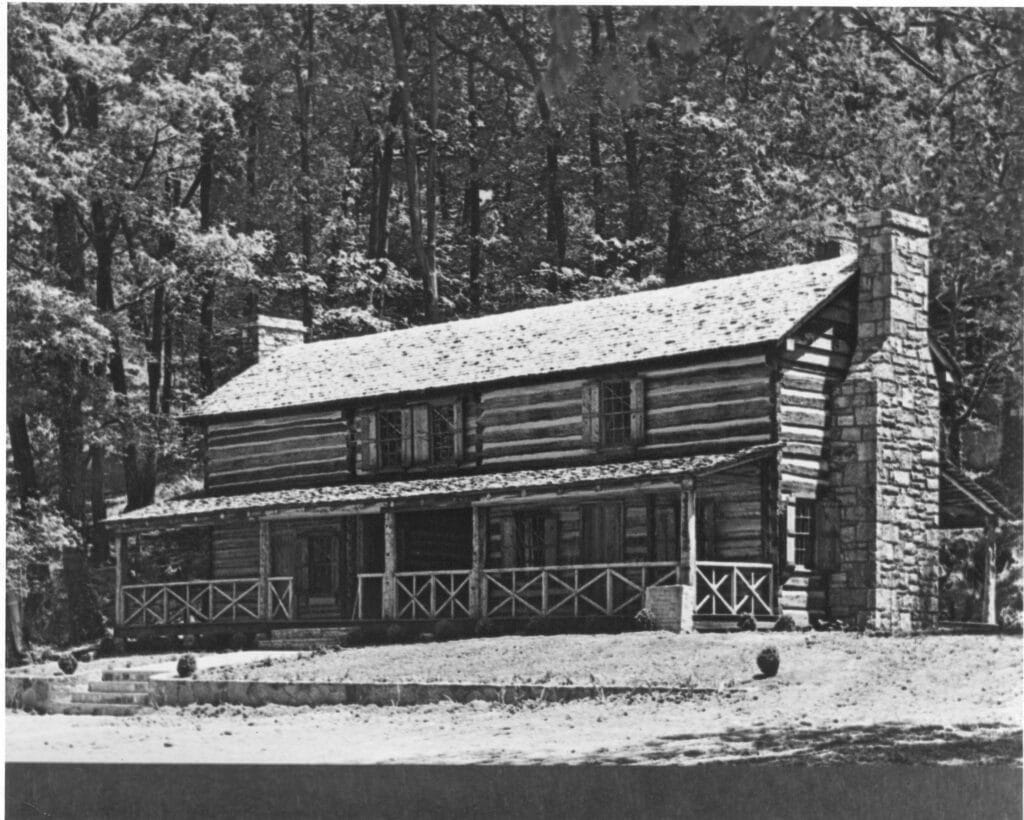
Dig deeper: At New Echota State Historic Site near Calhoun, a relocated 1830s Cherokee home and its outbuildings show what a working farmstead looked like.
2. Georgians, not federal soldiers, carried out the roundup here
Gen. Winfield Scott oversaw the operation from Tennessee, but the men doing the work in Georgia were Georgians. Hill found that the state militia made up nearly the entire force and manned almost every post.
Georgia militia Gen. Charles Floyd took command at New Echota on May 24, 1838. His first sweep came two days later along the Coosawattee River, and by nightfall his men had taken 209 Cherokees captive.
Missionary Daniel Butrick watched the roundup unfold. In two or three days, he wrote, about 8,000 people “were rendered homeless, houseless and penniless.”
By June 15, Floyd reported that no Cherokees were left in Georgia. From start to finish, the roundup took about 20 days.
Discipline was another matter. Outside Cedartown, a militia company that had never been authorized drew complaints for drunkenness and for shooting at Cherokees who passed by. Gov. George Gilmer conceded the unit was acting against state orders, Hill writes, yet he didn’t rein it in.
Dig deeper: A marker at New Echota State Historic Site remembers Fort Wool, the militia’s Georgia headquarters, whose site sits on private land just south of the park.
3. The “forts” were never meant to hold people
If you’re picturing a stockade packed with prisoners, you’re picturing the wrong thing.
Georgia’s removal posts existed for the soldiers: barracks, storehouses, and a show of force to calm white settlers, Hill found. Captured Cherokee families camped in the open nearby, often for only a few days, then were marched under guard to bigger camps in Tennessee.
Ooloocha, the widow of a man named Sweet Water, described being taken in an 1842 claim for lost property. Soldiers surrounded her home, she said, and “drove us out of doors and did not permit us to take anything with us, not even a second change of clothes.” Her family was held for about three days at a fort at New Echota, then marched to Ross’s Landing in present-day Chattanooga.
Dig deeper: Two outdoor exhibits at the Cedartown Encampment Removal Site, at Biggers Drive and North Furnace Street, tell the story of the camp that held Cherokee families there in 1838.
4. Metro Atlanta was part of the land lottery
If you live in Marietta, Canton, or Cumming, the ground under your house may once have been a lottery prize.
In 1832, six years before the forced removal, Georgia raffled off Cherokee lands in what are now Bartow, Cherokee, Cobb, Floyd, Forsyth, Gilmer, Lumpkin, Murray, Paulding, and Union counties, according to the New Georgia Encyclopedia. Most lots were 160 acres, and gold country was carved into 40-acre parcels.
The Cherokee drawings were the last chapter of a long story. Across eight lotteries from 1805 to 1833, the state parceled out about three-quarters of its territory, much of it taken from the Muscogee (Creek), and roughly 100,000 winners paid next to nothing for it.
And the Cherokee were still living there. When militia built a removal post near Canton in 1837, the land beneath it had already been privately owned for five years.
Dig deeper: The Georgia Archives explains how the 1832 lottery worked and how to search its records.
5. Georgia sent its own enforcers years before the roundup
Long before 1838, Georgia was already squeezing the Cherokee with a force of its own. The Georgia Guard took over from federal troops in 1831 to police Cherokee territory, and even Gov. George Gilmer later called one of its commanders “a man of lawless violence,” Hill writes.
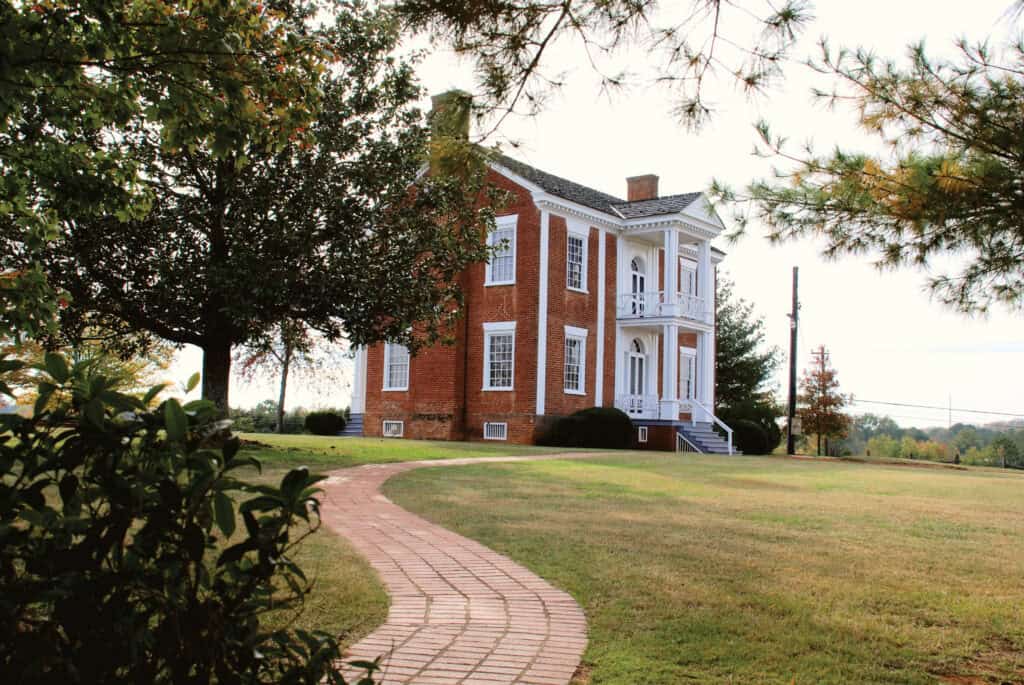
No one was too prominent to target. Joseph “Rich Joe” Vann lived in the brick mansion his father built in present-day Murray County in 1804. When he hired a white overseer, the Guard used a new state law barring white people from working for Cherokees to force his family out in the mid-1830s.
Even the press wasn’t safe. In 1835, the Guard hauled away the press that printed the Cherokee Phoenix, the first Native American newspaper, to silence its opposition to removal. The paper was later revived and still publishes today from Tahlequah, Oklahoma.
Dig deeper: See the reconstructed print shop at New Echota State Historic Site, then tour the Vann mansion at Chief Vann House State Historic Site in Chatsworth.
6. Principal Chief John Ross lost his own home to the lottery
John Ross spent a decade leading the Cherokee Nation’s fight against removal. Georgia’s government didn’t spare his home either.
According to Hill, in mid-March 1835, a Georgia militia commander handed Ross’s homestead at the Head of Coosa, in what’s now Rome, to a white man named Stephen Carter. Along with a two-story house warmed by four fireplaces, Carter got at least 16 outbuildings, including quarters for the people Ross enslaved.
Ross was living in Tennessee by fall. The Treaty Party, the small faction that favored removal, fared better: Its leaders’ Rome-area properties were partly shielded until the families headed west.
Dig deeper: Tree-ring dating places the Chief John Ross House in Rossville at about 1816, though its historical marker says 1797. In Rome, a 3-mile riverside path along the Oostanaula connects Major Ridge’s home, now the Chieftains Museum, to the site of Ross’s farm.
7. Enslaved Black people were forced west, too
The 1835 Cherokee census counted 8,936 Cherokees within Georgia’s borders, along with 776 enslaved African Americans.
Slaveholding was concentrated among a wealthy few. Fewer than 10% of Cherokee households held enslaved people, compared with 20% of the U.S. population at the time, according to Chief Vann House historical information cited by the Chattanooga Times Free Press. Ferry owner George Waters, in present-day Forsyth County, held about 100 people on his own.
When the roundup came, enslaved people were swept up along with everyone else. A May 30, 1838, report from Fort Means near Rome listed 260 prisoners, seven of them recorded as Black.
On the journey west, enslaved people did much of the work of survival, from cooking and packing to standing night watch, according to a University of Illinois digital history project. Those forced moves later complicated their descendants’ claims to Cherokee citizenship.
Dig deeper: At Chief Vann House State Historic Site, a two-story cabin that once served as the Vann kitchen and workhouse now tells the story of an enslaved African’s life in the Cherokee Nation.
8. The missionary Georgia jailed later helped count the dead
Dr. Elizur Butler is usually remembered for his time behind bars. He and fellow missionary Samuel Worcester were sent to the state penitentiary in Milledgeville for refusing to leave Cherokee territory. Gov. Wilson Lumpkin pardoned them in 1833.
Less often told is what came next. Butler went west with the Cherokee as their doctor, and his estimate of more than 4,000 dead, roughly one in five, is the source of the figure still cited today. The Cherokee Nation’s own materials use the same estimate: 4,000 deaths from exposure, starvation, and disease.
Georgia eventually revisited its role in Butler’s story. In 1992, the State Board of Pardons and Paroles pardoned both missionaries, saying the action “acts to remove a stain on the history of criminal justice in Georgia,” the Associated Press reported.
Dig deeper: A 1957 state historical marker on Georgia Highway 20 near Highway 100 outside Rome tells the Butlers’ story. Esther Butler, who died in 1829 after eight years with the Cherokee mission, is buried about 60 feet away.
9. Dahlonega’s removal fort stood near the gold mint
Gold put these hills at the top of Georgia’s wish list. After the precious metal turned up on Cherokee land in the late 1820s, the state extended its laws over the Cherokee Nation.
By the fall of 1837, Georgia militia were stationed in Dahlonega at what became Fort Floyd, a storehouse for munitions sent to other posts. Hill’s research places it near the site of the new U.S. Branch Mint, which opened in 1838, the same year as the roundup.
Don’t blindly trust the old marker, though. A 1954 state historical marker identifies a different spot, known as “The Station,” as the removal stockade, and locals took to calling it Fort Dahlonega. Hill found no documentation tying that site to Fort Floyd.
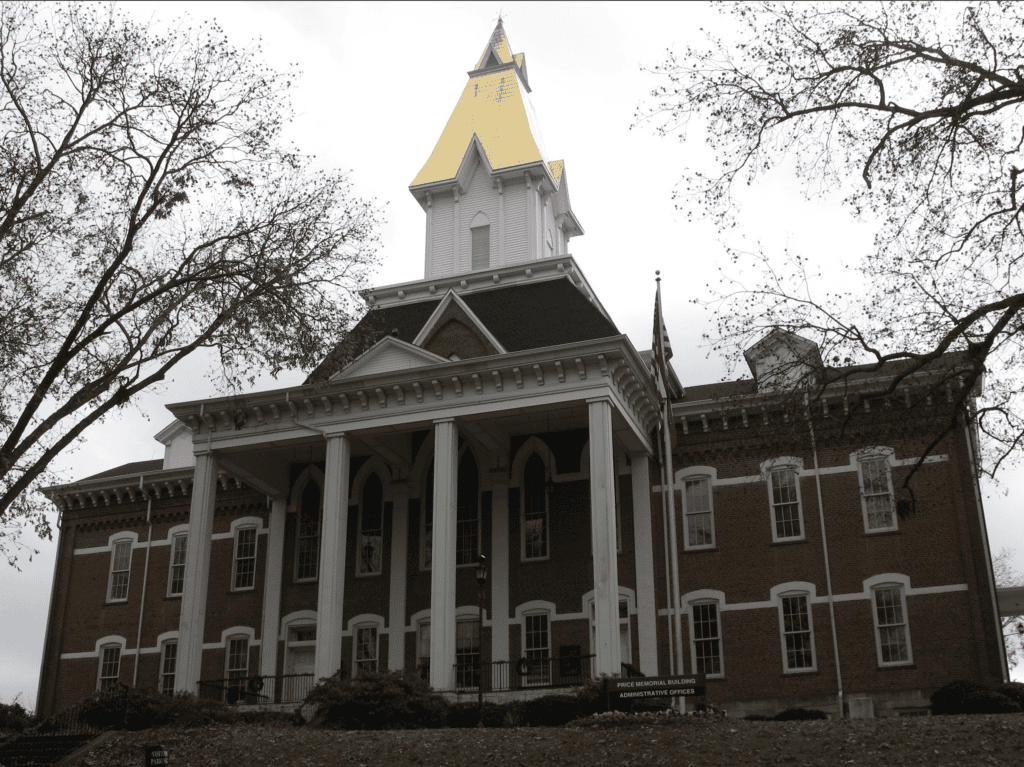
Dig deeper: Price Memorial Hall, with its gold-leafed steeple on the University of North Georgia’s Dahlonega campus, sits on the old mint’s foundation.
10. Each year, Cherokee riders retrace the route, starting in Georgia
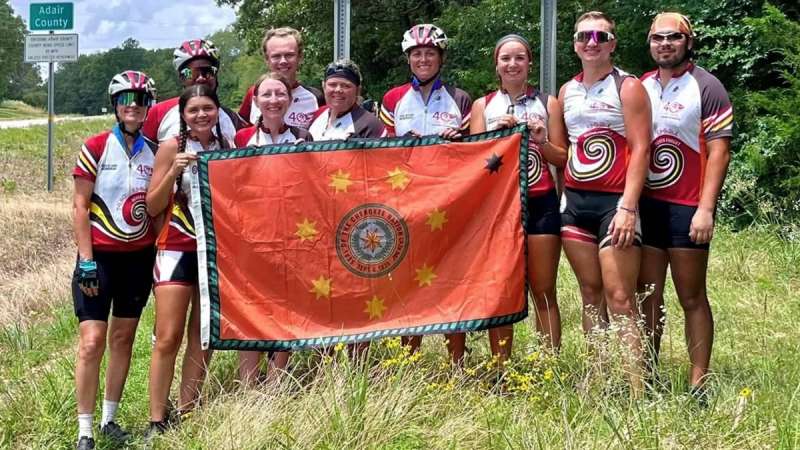
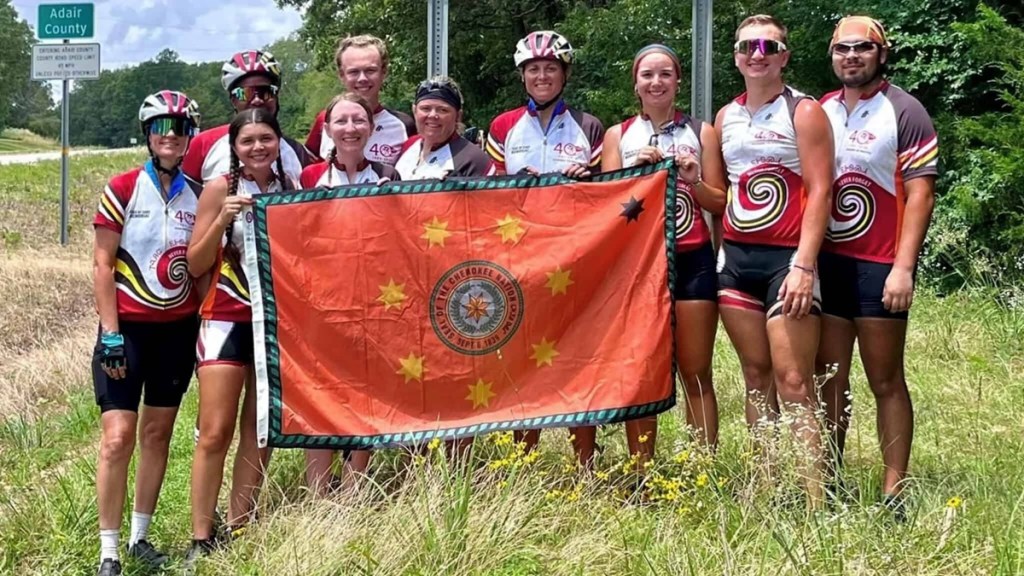
The Cherokee Nation ensures that the trail doesn’t remain a footnote in history. Most summers, its Remember the Removal Bike Ride begins at New Echota, tracing the northern route through seven states to Tahlequah, Oklahoma, for about 950 miles. Before setting out, the riders meet leaders from the Eastern Band of Cherokee Indians at the old capital.
Principal Chief Chuck Hoskin Jr. has called the ride “one of the most valuable cultural activities Cherokee Nation supports” in a 2024 column marking the ride’s 40th anniversary.
Dig deeper: The Remember the Removal site introduces each year’s riders and maps their route.
11. Part of the removal treaty still hasn’t been honored
The Treaty of New Echota set the terms for removal, though a small group of Cherokees signed it in December 1835 without the Nation’s authorization, and most Cherokees petitioned against it.
The same treaty made a promise that’s still outstanding. Article 7 says the Cherokee Nation “shall be entitled to a delegate in the House of Representatives.”
In 2019, Principal Chief Chuck Hoskin Jr. named Kim Teehee as that delegate, and the Cherokee Nation Council approved her that August. The seat would be nonvoting, according to the Congressional Research Service.
As of this writing, the House still hasn’t seated her. The Cherokee Nation’s pitch to Congress is blunt: The seat has been “denied to Cherokee Nation for 187 years.”
Dig deeper: Stand where the treaty was signed at New Echota State Historic Site near Calhoun, then read the treaty language and the campaign for the seat on the Cherokee Nation’s delegate page.
This article first appeared on Good Info News Wire and is republished here under a Creative Commons license.
Related: From Savannah to Dahlonega: 13 cemeteries in Georgia with chilling backstories