Edit: Gov. Kemp’s office did not respond by the publication deadline of 11 a.m. A response was received at 11:48 a.m., after this story was published. Their statement has been added below.
While serving as Georgia’s 83rd governor, Brian Kemp has never stopped doing business.
He has long held interests in a range of private companies: rental properties in Athens, a former investment stake in the agribusiness Hart AgStrong, and a real estate company called Shelter Rock Partners. But unlike some elected officials, he never placed those assets in a blind trust. He has continued to manage and profit from them throughout his time in office.
When Kemp entered the governor’s mansion in 2019, he carried significant debt. But by the end of his first term, much of it had vanished.
New reporting by Courier Georgia has found that one of the ways he shed it was by selling lakefront properties in a series of six-figure transactions. Kemp’s company, Shelter Rock, had struggled to sell the properties for more than a decade. But two years into his term as governor, he sold them—all to buyers who later received something from the state.
Documents obtained by Courier show deeds, property records, and contracts that tie Kemp to all of the buyers in various business deals, political affiliations, and appointments.
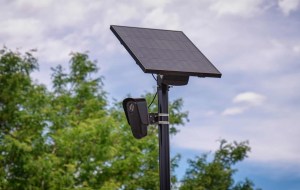
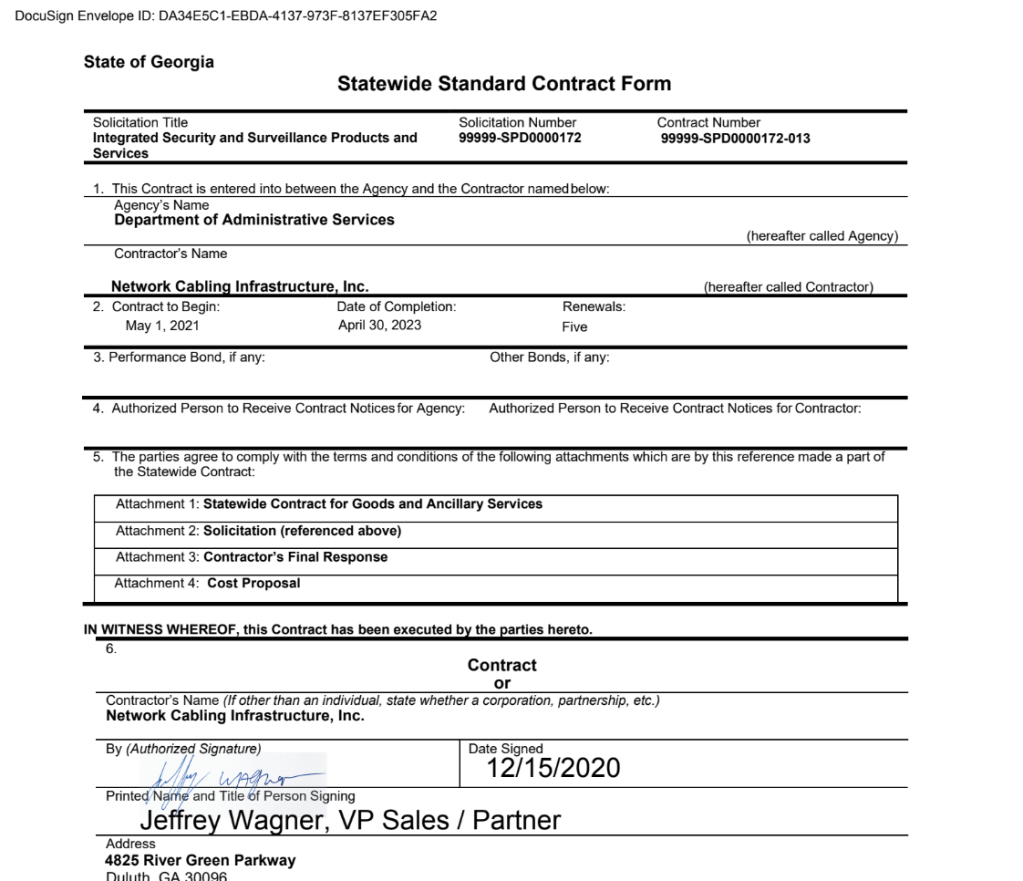
Less than four months after purchasing one of the lakefront parcels, Donnie Richards’ company, Network Cabling Infrastructures (NCI), signed a statewide contract to supply security and surveillance products to Georgia agencies.
The same month that the owner of one of the largest coin-operated amusement machines in Georgia—or COAMs—companies, Lee Hunter, purchased his property, the Georgia Lottery Commission launched a pilot program allowing COAMs to distribute gift cards at gas stations statewide. Jim Cole, who purchased parcels with Hunter, was later appointed by Kemp and Lt. Gov. Burt Jones (R) to two state boards, including the one that regulated COAM machines.
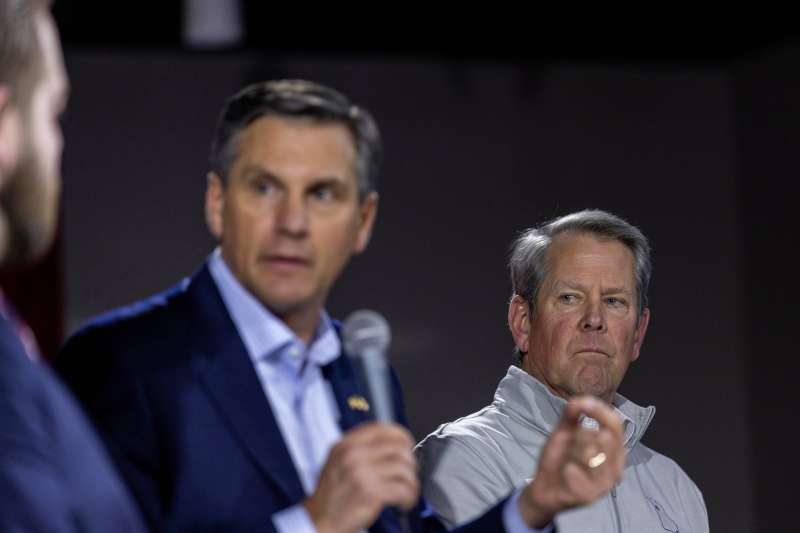
These revelations emerge as Kemp faces separate scrutiny over his personal ties to state business. Recent reporting found Kemp steered millions of dollars in state education contracts to Daniel Dooley, one of his closest friends. Daniel is the brother of Derek Dooley, the Republican Senate candidate. Kemp has endorsed Derek, campaigned alongside him, and his PAC has backed his primary with more than $3 million.
Coming into office in debt
According to the Atlanta Journal-Constitution, Kemp’s net worth grew by 65% during his first term in office. That growth mostly came from the elimination of $6.3 million of debt.
Among the liabilities that were dragging down his balance sheet were three lakefront parcels along Lake Strom Thurmond, the sprawling reservoir straddling the Georgia-South Carolina border also known as Clarks Hill Lake.
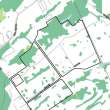
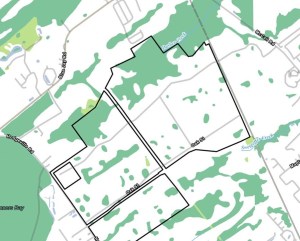
In September 2007, Shelter Rock Partners agreed to pay more than $1 million to acquire roughly 161 acres. The land was carved into several parcels, some with dockable shorelines on the US Army Corps of Engineers-managed lake.
The timing was disastrous. The Great Recession hit, lakefront development stalled, and the parcels sat empty year after year. Archived real estate listings show one parcel asking $195,000 in 2010, a price that had been slashed 54% to $89,000 by February 2020, and still found no buyers.
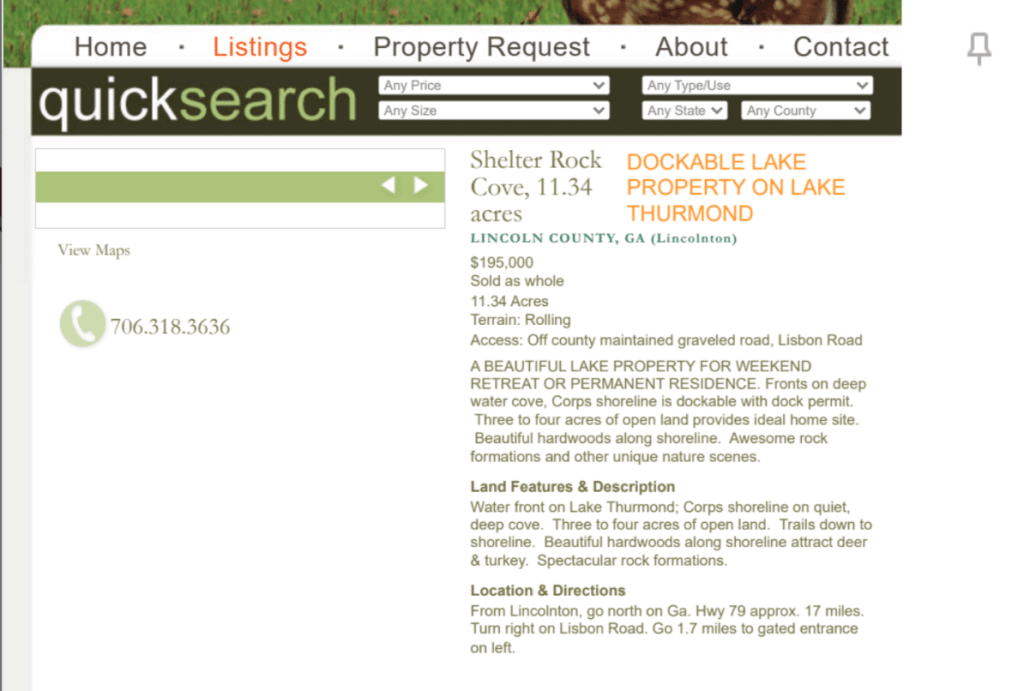
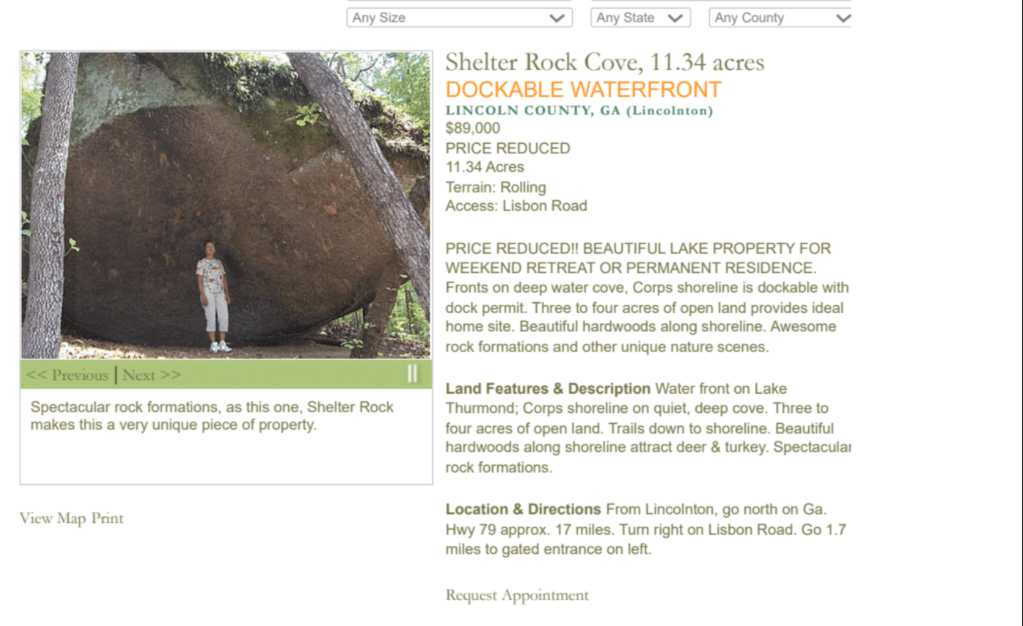
By then, Shelter Rock had twice renegotiated the terms of its loan and still owed the bank more than half a million dollars on land it held for thirteen years.
Then Kemp became governor.
Two years into his tenure, all three parcels finally had buyers in a series of six-figure transactions—far more than the 2020 asking price—that helped erase the debt the company had carried for over a decade. Kemp signed the deeds for the transactions himself.

Selling to buyers with state business
Donald “Donnie” Richards was the president of Network Cabling Infrastructures (NCI), an Atlanta-based company specializing in security systems and infrastructure. In August 2020, Richards purchased two of Kemp’s lakeside parcels for $260,000, significantly more than the previous asking price.
What state procurement records reveal is that NCI was competing for a state contract at the time of the purchase. After Richards bought the parcel, NCI was awarded the same state contract to provide security and surveillance products to Georgia agencies.
Since that land transaction in 2020, records show NCI has received more than $2.1 million in payments from the state of Georgia. It is not clear whether state officials were aware of this land transaction when NCI’s bid was evaluated.
Selling to buyers who benefited from new legislation
The second transaction was the most complex and, in terms of policy outcomes, the most significant. In September 2020, a new limited liability corporation, or LLC, was formed in Georgia. Two months later, that LLC purchased one of Kemp’s lakefront parcels. The company had two organizers: Lee Hunter and Jim Cole.
Hunter was not a stranger to Kemp’s political orbit. State campaign finance records show he had contributed at least $31,900 to Kemp’s campaigns since 2009, making him one of Kemp’s more consistent financial supporters over the years. Hunter, who passed away in 2022, was also the founder and president of Southern Gaming Solutions, which created coin operated COAMs. These machines have proliferated in gas stations throughout the state.
The same month the land deal closed, the Georgia Lottery Commission launched a pilot program authorizing Southern Gaming Solutions and other gaming machine companies to award winners with gift cards loaded with cash.
Three months after the land purchase, one of Kemp’s own floor managers in the State Senate, Sen. Clint Dixon (R-Gwinnett), introduced SB 536, legislation that would have written the pilot program into permanent law. When it was introduced, the bill ran into a wall of opposition.
“We should not fool ourselves that these machines don’t attract nuisances, they create nuisances and problems in our community,” said state Rep. Stacey Evans (D-Atlanta). Critics have repeatedly argued that the machines function as de facto slot machines, preying on low-income communities. The bill stalled and died.
But two years later, lawmakers revived the effort. Despite widespread concerns, Kemp signed HB 353 into law in 2024. It allowed COAM machines to pay out awards with gift cards, effectively legalizing slot machines in the state of Georgia.
The third buyer, Jim Cole, was already in Kemp’s business orbit before the sale took place. Cole is a prominent Georgia Republican and a former stakeholder in Shelter Rock Partners.
After the transaction closed, Cole’s relationship with the Kemp administration deepened. In 2023, Kemp appointed Cole to the State Charter School Commission. And in April, Jones appointed Cole to the Coin Operated Amusement Machine Advisory Board, the same COAM industry that Hunter had spent years operating in, and that Kemp had just signed into expanded legality.
Cole has also donated to Derek Dooley’s Senate campaign, deepening his ties to a political network that Kemp has invested heavily in building.
Future concerns
The scrutiny arrives at a potentially uncomfortable moment. Kemp has staked the final chapter of his governorship on electing Dooley to the US Senate, who will face US Rep. Mike Collins (R-Ga.) in a runoff on June 16th.
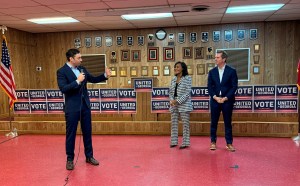
Charles Bullock, a political science professor at the University of Georgia, says that bond cuts both ways. Whether it’s US Sen. Jon Ossoff (D-Ga.) and Keisha Lance Bottoms, Democratic candidate for governor, or Brian Kemp and Derek Dooley, he said, voters regularly conflate the identities of people who choose to campaign together.
For a relatively unknown first-time candidate like Dooley, who is a former University of Tennessee football coach and attorney, that association with Kemp is the strategy.
“He doesn’t have a record and he’s not nearly as well known,” Bullock said. “There’s a strong incentive for Dooley to see if some of Kemp’s popularity will rub off.”
But if the scrutiny surrounding the governor deepens, the same bond that buoys Dooley’s candidacy could weigh it down.
Statement: The transactions you are referencing were undertaken to disentangle the Governor from a longstanding business partnership, directly opposed to the assertion you are making. Furthermore, the Governor has no involvement in the state contracting or procurement process, and there are strict laws in place prohibiting such involvement. HB 383 received broad bipartisan support and underwent a thorough review process before the Governor’s decision to sign it. The Governor maintains the highest standards when separating his personal enterprise from his role as chief executive, as evidenced by exact transaction you are misconstruing.